
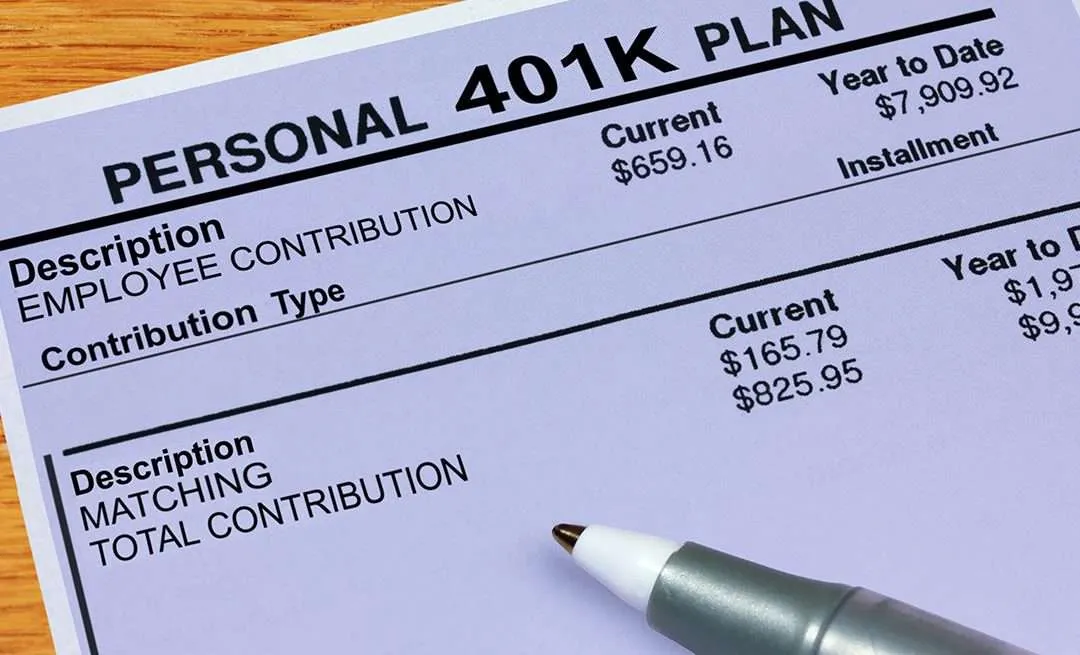
Manufacturing employees leaving their companies face key decisions about their 401(k) accounts. Choices made in the first 60 days can cost thousands in taxes or save money for decades. Most assume rolling over a 401(k) is simple. However, tax rules can turn routine transfers into taxable events if mishandled.
Your 401(k) holds years of savings from payroll deductions. When you retire or leave your manufacturing job, you can keep the money there, roll it into an IRA, move it to a new employer’s plan, or cash it out. Each option has different tax implications and affects how you manage your money during retirement.
Should You Leave Your 401(k) With Your Former Employer?
Keep your 401(k) with your former employer if the plan offers low-cost investments. This choice can also make your transition to retirement easier. Many manufacturing companies offer high-quality 401(k) plans with institutional pricing, typically lower than individual options.
However, you lose control over plan changes after you leave the company. Former employers can change investment options or increase fees. They may even terminate plans, forcing distributions at inconvenient times. You also cannot consolidate multiple old 401(k) accounts from different jobs into a single account for easier management. Required minimum distributions starting at age 73 become more difficult to calculate and coordinate across multiple accounts.
Most manufacturing workers benefit from rolling 401(k)s into IRAs, which provide investment control, consolidate old accounts, and simplify required minimum distributions in retirement.
What Is the Difference Between Direct and Indirect Rollovers?
The method you use to move money from your 401(k) to an IRA determines whether you trigger taxes and penalties. According to IRS Publication 575 on pension and annuity income, direct rollovers move money directly from your 401(k) custodian to your IRA custodian without you touching the funds, as indirect rollovers send you a check that you must deposit into an IRA within 60 days.
Direct rollovers avoid tax issues since the money never touches your hands. The IRS does not count it as a distribution. Indirect rollovers cause problems. Your former employer withholds 20% for taxes when sending the check. You have 60 days to deposit the full amount, including the 20% withheld, into an IRA. Otherwise, that 20% becomes taxable income plus a 10% early withdrawal penalty if you are under 59½.
Always use direct rollovers to avoid complications with withholding and missed deadline risks. Contact your new IRA custodian first. Complete their rollover paperwork and let them coordinate the transfer directly with your former employer’s 401(k) administrator.
Should You Roll Your 401(k) Into a Traditional IRA or Roth IRA?
Traditional 401(k) money can roll into traditional or Roth IRAs. The tax consequences differ. Rolling into a traditional IRA incurs no immediate taxes because both accounts are pre-tax, retaining the 401(k)’s tax treatment. Rolling into a Roth IRA triggers taxes on the entire rollover in the year you convert, since Roth accounts are after-tax.
The IRS provides detailed information on rollover rules showing which account types can roll into which other account types and the tax implications of each combination. Many manufacturing workers rolling over 401(k) accounts at retirement choose traditional IRAs to avoid large tax bills in the rollover year.
Roth conversions make sense when you expect higher tax rates in future years. Converting large 401(k) balances at once often pushes you into higher tax brackets. Partial conversions over several years spread the tax burden and keep you in lower tax brackets.
What Mistakes Cost Manufacturing Workers Money During Rollovers?
Missing the 60-day deadline for indirect rollovers is costly. The IRS treats missed deadlines as taxable distributions, with no exceptions. The entire rollover amount becomes taxable income. Workers under 59½ pay an additional 10% early withdrawal penalty plus regular income taxes.
Cashing out 401(k) accounts instead of rolling them over results in immediate taxation and could destroy retirement savings. A manufacturing worker cashing out a $200,000 401(k) at age 62 loses about $50,000 to $70,000 to taxes and penalties. Only $130,000 to $150,000 remains for retirement, which needs to last 20 to 30 years.
Rolling company stock held in 401(k) accounts requires special handling because net unrealized appreciation rules can save you significant taxes. The IRS explains net unrealized appreciation rules in Publication 575 and shows how special tax treatment applies when you transfer employer stock to taxable brokerage accounts instead of rolling it into IRAs. If you miss this opportunity, you could lose thousands in unnecessary taxes on appreciated company stock.
How Do Rollover Decisions Affect Required Minimum Distributions?
Required minimum distributions start at age 73. They force you to withdraw minimum amounts from traditional IRAs and 401(k) accounts each year, based on your balance and life expectancy. Consolidating old 401(k) accounts into one IRA simplifies these calculations. It also reduces mistakes that trigger penalties.
Missing required minimum distributions results in a 25% penalty on the amount you should have withdrawn, so you need to calculate accurately during retirement years. Owning a single consolidated IRA, rather than several scattered 401(k) accounts from previous employers, makes tracking balances and calculating distributions straightforward, not complicated.
By understanding what makes wealth planning unique for manufacturers, you see why consolidating retirement accounts before required minimum distributions start saves time and avoids costly mistakes when you need retirement income most.
What Happens to Outstanding 401(k) Loans When You Leave Your Job?
When you leave your employer, outstanding 401(k) loans become due. If you don’t repay them by the tax return deadline for that year, the unpaid balance is treated as taxable income. It is considered a distribution subject to income taxes and a 10% penalty if you are under age 59½.
Some plans allow loan repayment over longer periods after you leave, though most manufacturing company 401(k) plans require full repayment within 60 days of termination. Check your plan’s loan policy before leaving your job and either repay the loan before your last day or plan for the tax consequences of default. Understanding the broader context of transitioning from manufacturing work to retirement helps workers coordinate 401(k) decisions with other retirement planning steps, such as health insurance coverage, Social Security timing, and pension choices.
What to Do Now
Before deciding on a 401(k) rollover, take these action steps to avoid mistakes and maximize your retirement savings:
- Contact your 401(k) plan administrator to identify your eligible rollover options and learn about any timing requirements.
- First, select and open an IRA with a trusted custodian. Then request the rollover so your funds transfer directly into the new IRA, rather than being sent to you by check.
- Obtain and complete the direct rollover forms from both your IRA provider and your 401(k) administrator to prevent errors during the process.
- Review your 401(k) for company stock and consult on whether the net unrealized appreciation rule applies before proceeding.
- Check if you have any outstanding 401(k) loans and determine if repayment or tax planning is needed before leaving your job.
FAQ
Can I roll my 401(k) into an IRA after I retire?
Yes, you can roll your 401(k) into an IRA at any time after leaving your employer. There is no deadline for rollovers from employer plans to IRAs, though you must complete indirect rollovers within 60 days if you receive a check rather than using direct transfers.
Will I pay taxes when I roll over my 401(k) to a traditional IRA?
No, rolling a traditional 401(k) into a traditional IRA doesn’t trigger a taxable event because both accounts have the same pre-tax treatment. You only pay taxes later when you withdraw money from the IRA during retirement.
What happens if I miss the 60-day rollover deadline?
Missing the 60-day deadline on an indirect rollover makes the entire distribution taxable income. You will owe income taxes on the full amount plus a 10% early withdrawal penalty if you are under age 59½. Always use direct rollovers to avoid this deadline entirely.
Should I cash out my 401(k) when I retire?
No, cashing out your 401(k) triggers immediate income taxes on the entire balance plus a 10% penalty if you are under age 59½. Rolling the money into an IRA preserves your retirement savings and defers taxes until you make withdrawals during retirement.
This material is for informational purposes only and is not individualized investment, legal, or tax advice. Examples are illustrative and not guarantees of any outcome. Tax laws and interpretations change, and results depend on each person’s specific facts and circumstances. Consult your tax and legal advisers before implementing any strategy.